
Helping NGOs and
Non Profit Organizations build scale and enhance impact through process optimization and technology enhancements
Non Profit Organizations build scale and enhance impact through process optimization and technology enhancements
Koita Foundation drives large-scale digital transformation across healthcare and social sectors by partnering with NGOs, academic institutions, and healthcare organizations. Through technology adoption, training, and capacity building, KF enables organizations to improve efficiency, expand reach, and create sustainable impact for underserved communities nationwide.
Digital Health & AI
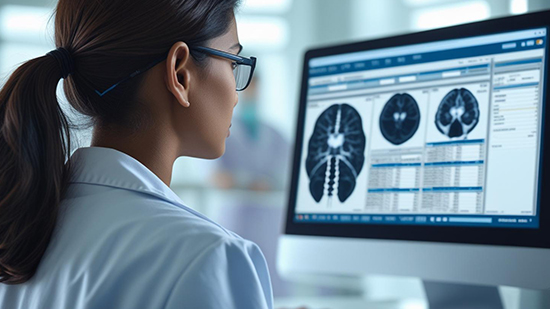
Koita Foundation partners with leading academic institutions, hospitals, healthcare technology companies, and NGOs to drive Digital Health & AI adoption in India. KF partnered IIT Bombay and Ashoka University -to establish centres for Digital Health.
KF has established the Koita Centre for Digital Oncology in partnership with the National Cancer Grid, and the Koita Centre for Digital Diabetology in partnership with RSSDI.
KF is working on multiple Digital Health initiatives of national scale, including supporting the National Accreditation Board for Hospitals & Healthcare Providers (NABH) define Digital Health standards, and the National Health Authority (NHA) and MUHS in education and capacity building.
NGO Transformation
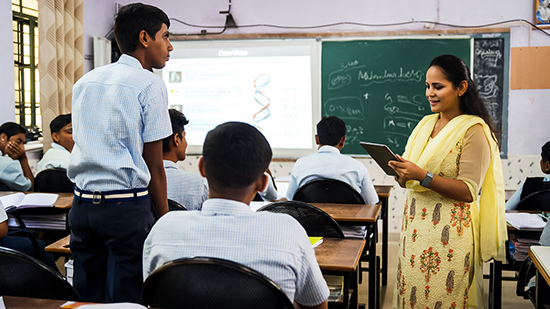
Koita Foundation partners with NGOs to help them scale effectively by integrating digital & AI tools and data-driven strategies into their operations. By improving efficiency, expanding reach, and strengthening decision-making,
KF enables NGO organizations drive sustainable impact. KF has worked with over 25 NGOs across healthcare, education, and livelihood, helping them adopt technology for better organizational performance and impact.
In addition, the Koita Centre for Digital Transformation (KCDT), established in partnership with ILSS, provides NGOs across India with training, resources, and mentorship to support their digital & AI journey.
Partners

NCG - KCDO
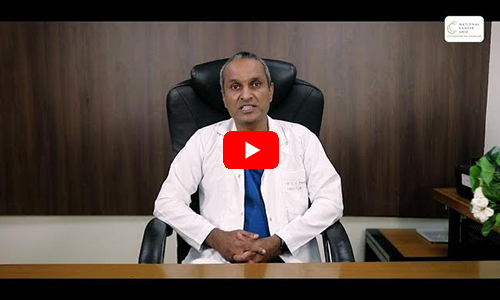
NCG-KCDO works towards the digital transformation in cancer care. Working with member hospitals and ecosystem stakeholders, they are reimagining how hospitals, clinicians, and patients can leverage digital health tools to make cancer care more efficient, accessible, and affordable.
Dr. C.S. Pramesh
Convener of NCG
Director of Tata Memorial Hospital
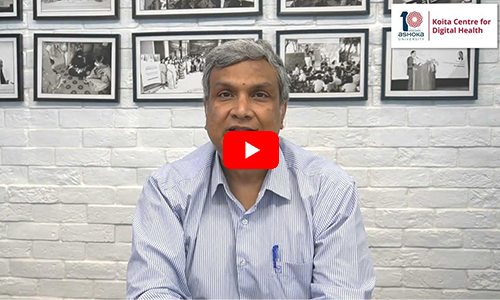
Koita Centre for Digital Health - Ashoka University
(KCDH-A)
KCDH at Ashoka University advances digital health through interdisciplinary education, research, and innovation. It offers programs focused on AI, medical imaging, and health informatics, preparing future professionals and collaborating to improve healthcare access and equity with digital solutions.
Dr. Anurag Agrawal
Head, Koita Centre for Digital Health (Ashoka University)
Dean, Biosciences and Health Research, Trivedi School of Biosciences, Ashoka University
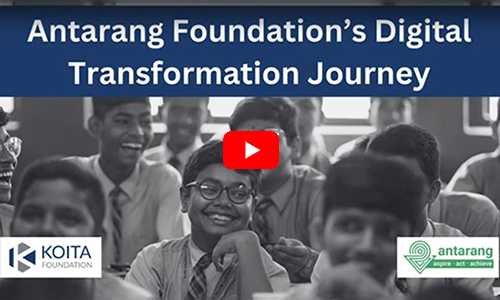
Antarang Foundation
Antarang Foundation empowers the youth from underserved communities by providing career guidance, life skills, and mentorship to facilitate their transition from education to employment. Digital Transformation has improved efficiency, efficacy and the ability to deliver impact at scale. The support has enabled facilitators to focus on students and real time access to data, provisioning for data driven decision making.
Ms. Priya Agrawal
Founder, Director
Antarang Foundation
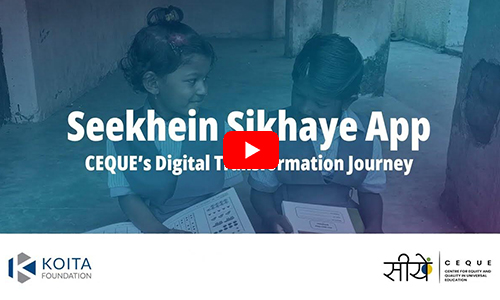
CEQUE, Seekhein Sikhaye Aap
CEQUE enhances the quality of education in government and low-income private schools by training teachers in innovative teaching methods, aiming to improve student learning outcomes. The tech journey has enabled scalability to new schools and students, improved teacher learning outcomes, and reduced operational planning time.
Ms. Uma Kogekar
Chief Executive Officer
Center for Equity and Quality in Universal Education
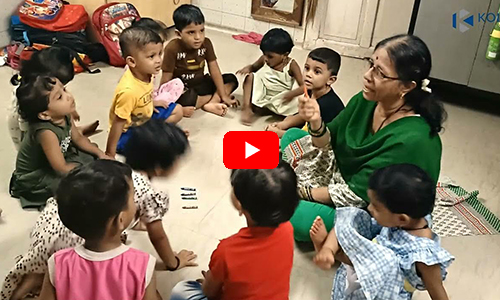
VIPLA Foundation, Umang Balwadi App
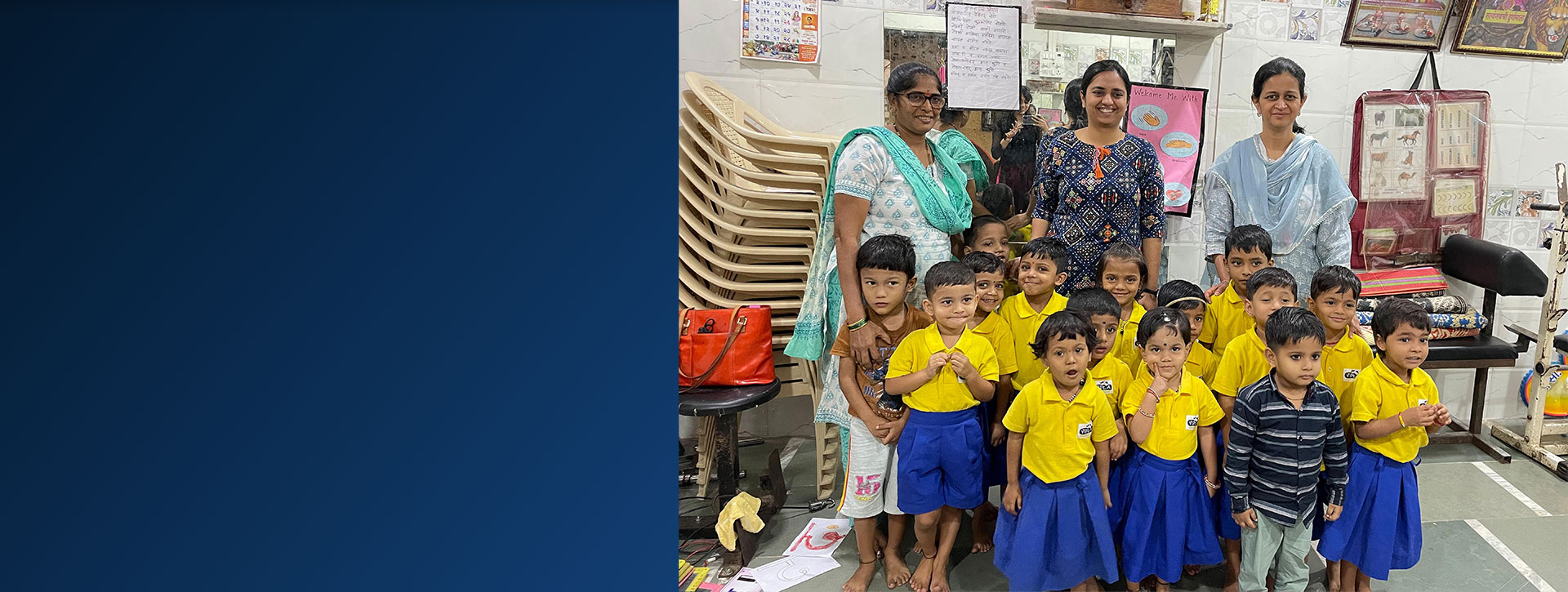
Vipla Foundation protects vulnerable women and children from exploitation and discrimination, empowering them for dignified lives. The Umang Balwadi app improved operational efficiencies, reduced paperwork, and streamlined the entire program.
Mr. Pramod Nigudkar
Chief Executive Officer
VIPLA Foundation
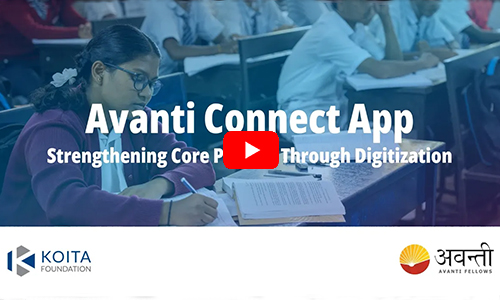
Avanti Fellows, Avanti Connect App
Avanti Fellows empowers students and promotes educational equity by using technology to improve Math and Science learning for students, while supporting government schools. The Avanti Connect App gives tele-counsellors access to data, and create call priorities; improving productivity and student engagement.
Akshay Saxena
Co-Founder and Co-CEO
Avanti Fellows
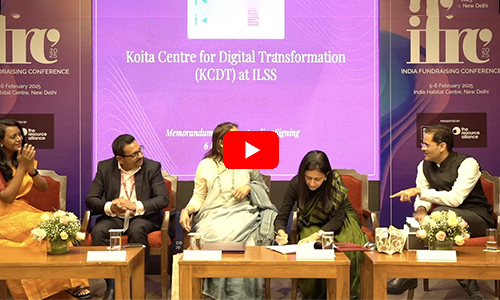
ILSS - KCDT
The Koita Centre for Digital Transformation (KCDT) is aimed at accelerating digital adoption in India’s social sector. Through structured programs, expert mentorship, and access to technology resources, KCDT equips Social Sector Organizations (SSOs) with the knowledge and tools needed to integrate digital solutions effectively. By leveraging these technologies, SSOs can enhance data-driven decision-making, increase transparency, and create more scalable, sustainable impact.
News & Events

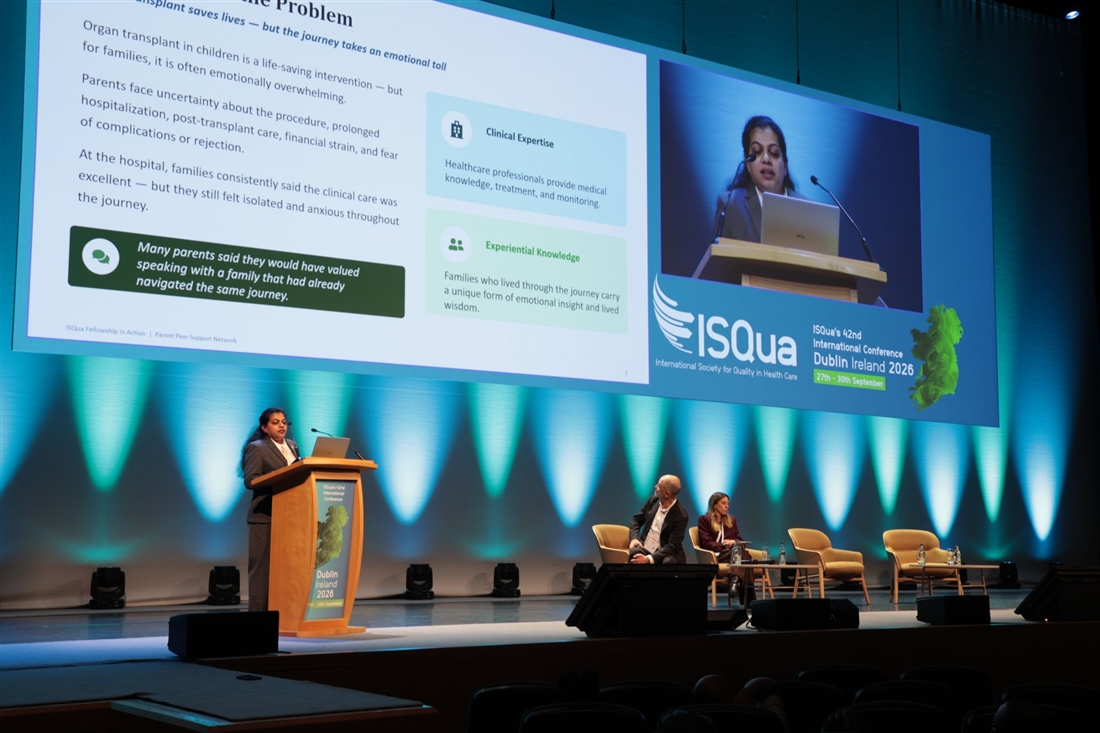
Mrudula Khedekar Recognised at ISQua’s 42nd International Conference
October 2026 -Koita Foundation is proud to share that Mrudula Khedekar, Senior Program Manager, has been recognised at ISQua’s 42nd International Conference in Dublin and won the ISQua Fellowship in Action presentation event.
As one of four Fellows selected from a community of over 2,000 Fellows to present at the Fellowship in Action session, Mrudula presented her work, “Creating a Community of Care: Establishing a Parent Peer Support Network for Pediatric Transplant Families.” The initiative focuses on establishing a peer support network for families navigating paediatric transplantation.
Her presentation was subsequently selected for the Closing Plenary, highlighting how learnings from the ISQua Fellowship can be translated into meaningful action within communities.
Koita Foundation congratulates Mrudula on this well-deserved recognition and for bringing this important work to an international platform.

Koita Foundation and ICMR Partner to Advance Digital Health and Healthcare AI
September 2026 -Koita Foundation has signed a Memorandum of Understanding (MoU) with the Indian Council of Medical Research (ICMR) to collaborate on Digital Health and Healthcare AI.
The collaboration will focus on Digital Health and AI capacity building, validation and generation of real-world evidence for Digital Health and AI solutions, innovation ecosystem development, data repositories and disease registries.
The partnership was signed in the presence of Dr. Rajiv Bahl, Director General, ICMR, and Dr. Mona Duggal, Director, ICMR-National Institute for Research in Digital Health (ICMR-NIRDH). Koita Foundation is grateful to Dr. Bahl and Dr. Duggal for their leadership and for the opportunity to collaborate with ICMR. ICMR's National Institute for Research in Digital Health (NIRDH) has been set up to strengthen capabilities in Digital Health and AI, and to accelerate responsible innovation and adoption at scale across India.
The occasion was also blessed by Dr. Sanghamitra Pati, Additional Director General, ICMR; Prof. Anurag Agrawal, Dean, Biosciences, Ashoka University and Head, Koita Centre for Digital Health at Ashoka University; Prof. Ranjith Padinhateeri, Head, Koita Centre for Digital Health, IIT Bombay; and Dr. Indu Bhushan, Founding CEO, National Health Authority, among other healthcare and Digital Health leaders.
Koita Foundation looks forward to working closely with ICMR and ICMR-NIRDH to strengthen the Digital Health and AI ecosystem and support the translation of innovation into meaningful applications for healthcare in India.

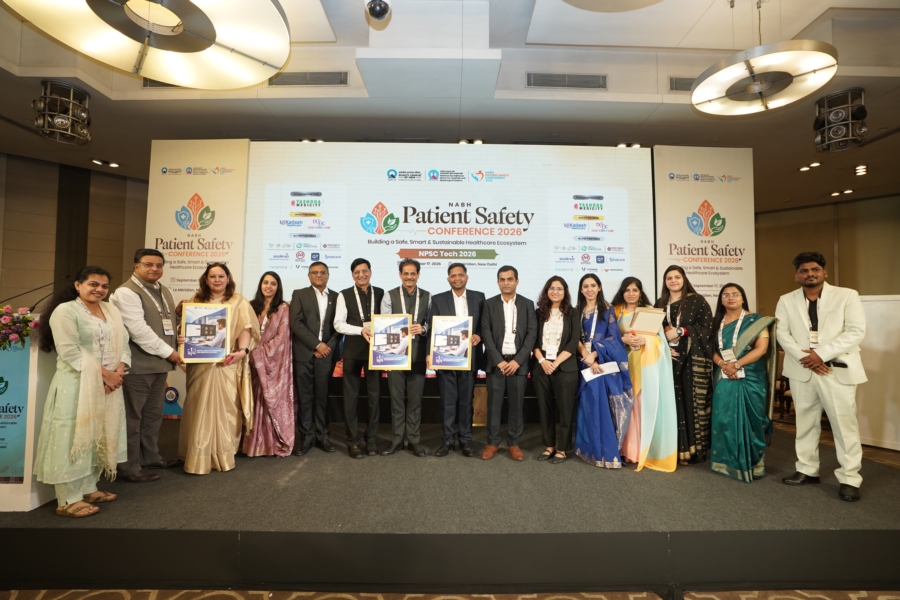
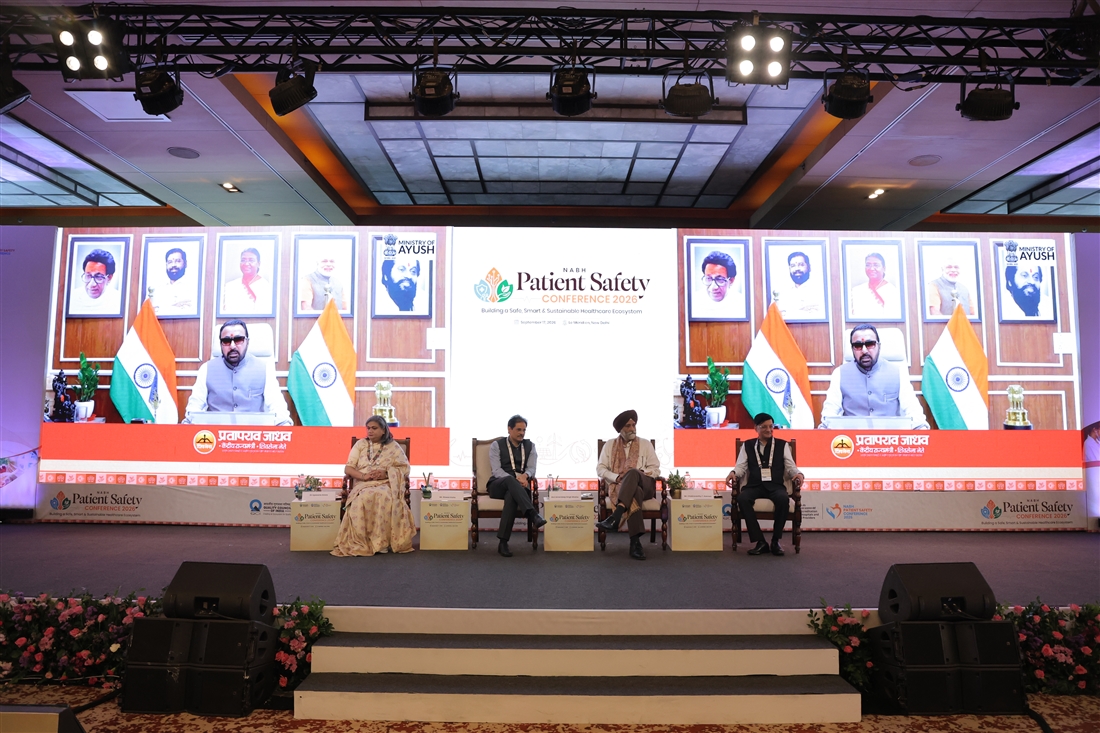
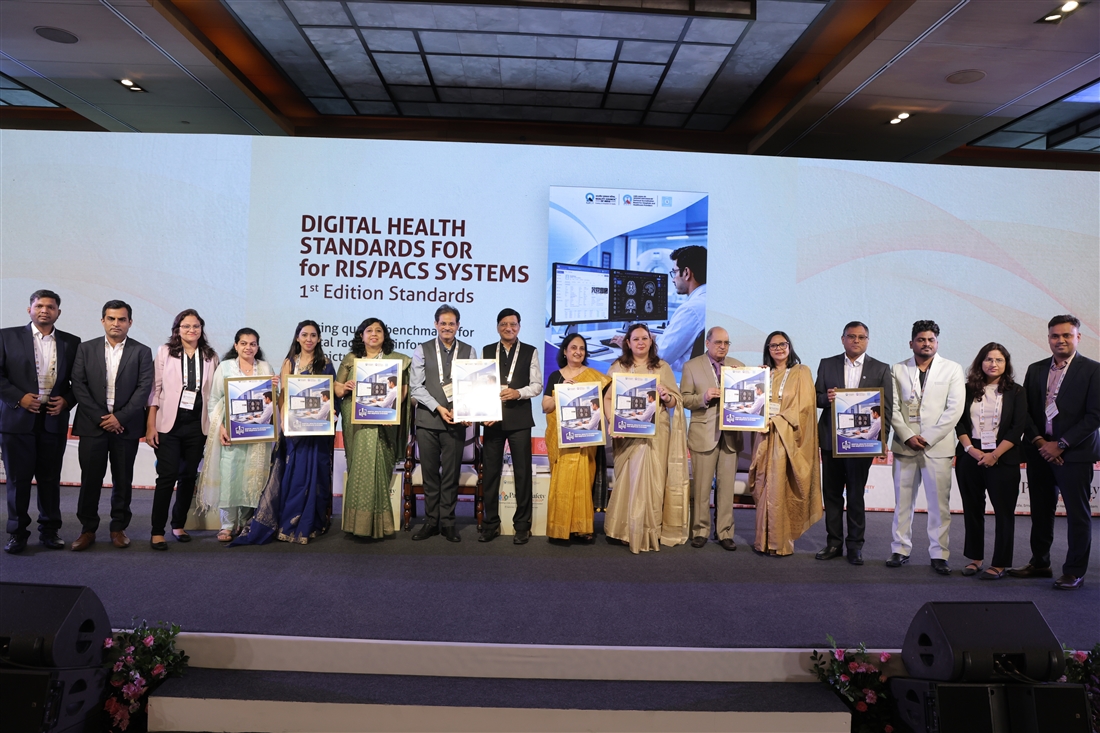
Digital Health Standards for RIS and PACS Launched at NABH Patient Safety Conference 2026
September 2026 -New standards for Radiology Information Systems (RIS) and Picture Archiving and Communication Systems (PACS) were launched by the National Accreditation Board for Hospitals & Healthcare Providers (NABH) at the NABH Patient Safety Conference 2026 in New Delhi on 17 September 2026.
Developed in collaboration with the National Cancer Grid – Koita Centre for Digital Oncology (NCG-KCDO), the standards provide a structured framework for hospitals and healthcare institutions to define their RIS-PACS requirements and evaluate solutions across areas including functional capabilities, technical requirements, interoperability, scalability, security and operational workflows. By establishing a common framework, the standards can support more consistent adoption of digital radiology systems across healthcare settings.
The standards also include oncology-specific requirements, addressing the specialised imaging and information needs of cancer care and supporting the digital transformation of NCG-empanelled centres.
The development of the standards brought together clinical and radiology experts, members of the NCG RIS-PACS Sub-Committee, NABH representatives and industry stakeholders, incorporating clinical, technology, operational and accreditation perspectives.
The launch is an important step towards strengthening standardisation and interoperability in digital radiology, while helping healthcare institutions adopt secure, scalable and connected radiology systems.
Koita Foundation supported this collaborative initiative as part of its commitment to advancing digital health standards and enabling the responsible adoption of technology across healthcare.

ISB Releases Report on Value of NABH Digital Health Standards Certification
August 2026 -The Max Institute of Healthcare Management (MIHM) at the Indian School of Business (ISB) launched a new report, Post-Adoption Value of NABH Digital Health Standards: A Multi-Hospital Assessment in India, at ISB's Hyderabad campus. Ajay Seth, Chairperson, Insurance Regulatory and Development Authority of India (IRDAI), released the report in the presence of Kannan Chakravarthy, Secretary General, Quality Council of India and CEO (I/C), NABH; Rizwan Koita, Chairperson, NABH; Professor Sarang Deo, Executive Director, MIHM, ISB; and Professor Sandeep Rath, Assistant Professor of Operations Management, ISB.
The independent study assessed 20 NABH Digital Health Standards (DHS)-certified hospitals across India, drawing on interviews and a survey of 80 hospital leaders.
Key findings of the study:
- Overall increase in Digital maturity: From 3.42 to 4.35/5.00
- Overall value of NABH DHS to hospitals: 4.62/5.00
- Data privacy and documentation quality: 4.56/5.00
- Operational efficiency: 4.38/5.00
- Interoperability: 4.29/5.00
Hospitals cited improving patient-care quality and operational efficiency as the leading reasons for adopting DHS. The report documented benefits including improved medication safety, better documentation and traceability, faster workflows, stronger governance, and reduced revenue leakage. It also found that staff training, workflow redesign and hospital leadership were key to converting DHS adoption into measurable gains, and pointed to automation, AI-enabled capabilities and deeper integration with the Ayushman Bharat Digital Mission (ABDM) as next steps for certified hospitals.

Union Minister Jitendra Singh Launches RSSDI VISHWAS Platform to Strengthen Diabetes Care
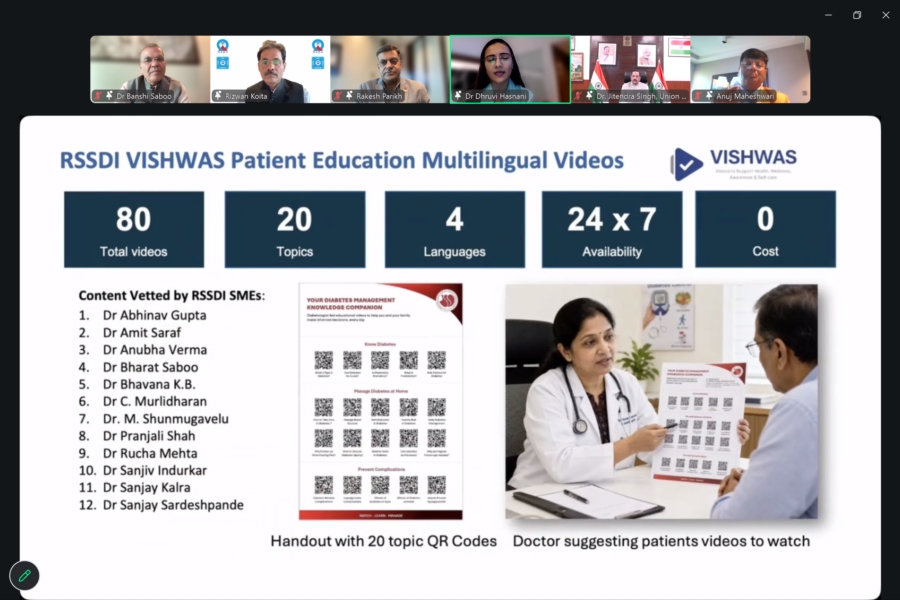
August 2026 -On the occasion of Independence Day, RSSDI and RSSDI-KCDD announced the launch of two digital & AI initiatives aimed at improving access to diabetes care and education in underserved communities across India: the RSSDI Rural Outreach Program (RROP) Digital Platform and RSSDI VISHWAS (Videos to Support Health, Wellness, Awareness & Self-care).
The initiatives were launched by Chief Guest Dr (Shri) Jitendra Singh, Union Minister of State (Independent Charge) for Science & Technology and Earth Sciences, and Minister of State for Atomic Energy. The event was also graced by Dr (Shri) Banshi Saboo, Chair, IDF South-East Asia, and Mr Rizwan Koita, Chairperson, NABH and Director, Koita Foundation.
The RROP Digital Platform has been developed to strengthen diabetes screening and management in rural and underserved areas by connecting rural health workers, RSSDI doctors, and programme teams through a unified digital ecosystem. The platform supports field-level screening and real-time programme monitoring, enabling a more structured and technology-enabled approach to last-mile diabetes care.
Complementing this effort, RSSDI VISHWAS, a scalable AI-supported platform helps patients and the public with easy-to-understand educational videos on diabetes self-care, healthy nutrition, and prevention of diabetes-related complications. The content is currently available in English, Hindi, Marathi, and Tamil, with plans to expand to 10 Indian languages, making reliable diabetes education accessible to a wider audience. Learn more - https://www.youtube.com/@rssdi-kcdd
RSSDI-KCDD continues to advance its mission of strengthening the continuum of diabetes care and improving access to quality care for underserved populations. Learn more about RSSDI-KCDD and its digital & AI initiatives - https://www.rssdi-kcdd.in/