
Founded in 2017, Open Links Foundation works to improve the quality of education in government schools by supporting and motivating teachers and administrators and strengthening programme implementation using technology and behavioural science. Working closely with government systems, the organisation supports teachers and education administrators to improve learning outcomes at scale.
Open Links Foundation's technology-enabled solutions enhance teacher effectiveness, strengthen programme delivery, and improve implementation efficiency across public education systems. Its interventions enable government stakeholders to better plan, monitor, and deliver education programmes while reducing administrative effort and supporting evidence-based decision-making.
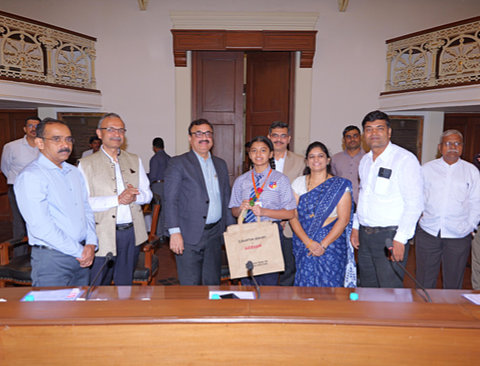
Open Links Foundation's flagship program, Vinoba, enables structured implementation of academic and life skills programmes across government schools. By supporting continuous practice, feedback, and monitoring, the platform strengthens foundational learning, examination preparedness, and holistic student development, while helping education administrators improve programme delivery and maximise the impact of existing government investments. Vinoba motivates teachers by recognizing their consistent efforts and commitment to improving classroom practices. Administrative officials felicitate teachers for their excellence, boosting morale, reinforcing professional pride, and inspiring the teacher community to strive for better learning outcomes.
Impact Since Inception
- Reached over 53 lakh students
- Supported 2.34 lakh teachers
- Worked across 71,000 schools in 40 districts spanning four states
- Saved over 11 lakh hours for teachers and education administrators
Metrics based on partner-reported data. Last updated: August 2026
Koita Foundation Partnership
Koita Foundation is collaborating with Open Links Foundation to develop the Disha Solution, a digital platform that strengthens internal programme planning, implementation, and service delivery. The initiative aims to improve operational efficiency through structured workflows, proactive monitoring, and data-driven decision-making.
Key Features of the Digital Solution
- Standardised workflows to enable consistent programme monitoring
- System-led scheduling of programme activities and field tasks
- Automated alerts for upcoming tasks, overdue activities, and performance gaps
- Early warning mechanisms to identify implementation risks and exceptions
- Analytics dashboards with predictive insights and trend analysis to support planning and decision-making